CASHFLOW ARCHITECTURE BRIEFING // SEASON 1, EPISODE 07 EXECUTIVE INTELLIGENCE BRIEFING
Forbes 4/14 ACTIVE GATES

What does Forbes Really Sell?

While iconic business publications like Fortune, Time, and Newsweek suffered catastrophic circulation collapses and magazine bankruptcies, Forbes engineered an asymmetrical survival playbook. The world assumes Forbes makes money by publishing print business magazines and online financial journalism. That is what is SEEN.

LIVE MATRIX PREVIEW
THE 7 MONEY GATES™ INTERACTIVE CANVAS

Want to skip the story and explore the interactive matrix showing all the gates this brand uses?

Test your commercial intuition: click to reveal the unseen cash engines, explore all 14 physical & digital gates, and see the exact mechanics this enterprise uses to extract profit.

FORENSIC CASE STUDY

The Architecture of B.C. Forbes' Vanity Industrial Complex

ACT I // THE INCUMBENT BLUNDER 01

The Ivory Tower Journalism Trap

When the open internet demolished print magazine circulation in the 2000s, traditional newsroom purists at Time, Newsweek, and Fortune panicked. They clung to high-overhead investigative reporting bureaus, subsidized legacy printing presses, and pleaded with luxury watch and automotive brands for print display pages. When Craigslist and Google obliterated classified and display margins, dozens of storied print mastheads collapsed into insolvency or private-equity fire sales.

Editorial elites believed a magazine's sole commercial product was high-minded journalistic prose sold to quiet subscribers. They viewed corporate sponsors with moral superiority, treating sponsored content as an unholy ethical contamination. They failed to realize that in modern capitalism, executive vanity and corporate status validation are infinitely more lucrative than ten-dollar annual print subscriptions.

"The business of business is to create happiness, not to pile up millions."

— B.C. Forbes, Founder of Forbes Magazine
ACT II // THE STRUCTURAL COUP 02

The Vanity Franchise & The Pay-to-Play Portal

Under Steve Forbes and digital architect Lewis DVorkin, Forbes dismantled the sacred church-and-state wall separating editorial reporting from commercial monetization.

Instead of paying full-time journalists to research business profiles, Forbes turned its platform into an open contributor network: over 2,500 unpaid outside contributors wrote articles for free in exchange for traffic and personal clout. Simultaneously, Forbes invented the modern status lottery through franchise lists: The Forbes 400, The World's Billionaires, and the ubiquitous '30 Under 30.' Founders and venture capitalists scrambled to get named to these lists, creating an insatiable global status game that Forbes monetized through high-ticket regional summits and corporate sponsorships.

The financial coup was completed with 'Forbes Councils' and 'BrandVoice.' Instead of begging companies to buy banner ads, Forbes invited executives and marketing departments to pay $2,500 to $5,000 annually for the privilege of publishing their own branded thought-leadership directly onto Forbes.com under a prestigious Forbes contributor byline.

ACT III // THE UNSEEN CASH ENGINES 03

The Three Tollbooths Funding Forbes' Global Cashflow

Casual readers assume Forbes survives on noisy programmatic web banners and newsstand magazine sales. Behind the headlines, Forbes operates an executive prestige tollbooth that monetizes corporate ego at near-zero marginal cost.

THE UNSEEN TOLLBOOTHS

How The Cash Actually Moves

01 Access Gate
Forbes Councils Pay-to-Publish Executive Memberships

Operated in partnership with YEC (Young Entrepreneur Council), Forbes Councils charges over 20,000 corporate executives, coaches, and consultants $2,500 to $5,000 annually. In exchange, members receive the right to publish self-written articles on Forbes.com and display the official 'Forbes Councils Member' logo on their marketing funnels—generating $60M+ in pure recurring subscription dues with zero editorial payroll cost.

FORENSIC METRIC 20,000+ Paying Members / $60M+ Recurring ARR
Source: Forbes Media LLC & YEC Partner Commercial Filings
02 Brand Gate
BrandVoice Corporate Sponsored Editorial Toll

Through BrandVoice, major corporations (SAP, IBM, Deloitte) pay $100,000+ monthly retainers to publish corporate marketing content that looks visually indistinguishable from native editorial articles. This allows Fortune 500 enterprises to bypass reader ad-blindness while handing Forbes software-grade publishing margins.

FORENSIC METRIC $100k+/Month Corporate Sponsored Publishing Retainers
Source: Forbes Media Advertising Upfront Rate Cards & Disclosures
03 Brand Gate
The '30 Under 30' Summit & Trademark Franchising Toll

Forbes transformed its annual lists into high-ticket global event franchises. Thousands of founders pay $1,500+ for conference tickets, municipal tourist boards pay millions in host-city subsidies, and corporate sponsors bid for stage branding. Simultaneously, Forbes licenses its trademark name to 40+ international regional publishers from Forbes Mexico to Forbes Japan.

FORENSIC METRIC 40+ International Licensed Editions & Summit Tolls
Source: Forbes Global Media Holdings Financial Disclosures
THE SEEN ENGINE
$140.00M

Print & Digital Advertising

The ad revenue generated by programmatic display banners, video ads, newsletter sponsorships, and print magazine insertions.

Source: Forbes Media LLC Operational Revenue Estimates
THE UNSEEN ENGINE
$80.00M

Forbes Councils & Brand Licensing

The recurring fee revenues generated by Forbes Councils memberships, brand licensing royalties, and product recommendation affiliate cuts (Forbes Vetted).

Source: Forbes Global Media Holdings Financial Disclosures

The real wealth is in what is NOT SEEN—how Forbes transformed a legacy editorial publication into a high-ticket status licensing and corporate executive vanity engine, monetizing billionaire rankings, charging six figures for 'Under 30' summit sponsorships, and selling 'BrandVoice' access that lets corporations pay to publish marketing copy directly into Forbes's editorial stream.

But which money gates does Forbes Media LLC use to stack this cashflow? Click each ? to reveal how they use that gate.

AGENT // PROFIT OPENER THE SEEN (PHYSICAL/DIGITAL) THE UNSEEN (PHYSICAL/DIGITAL)
1. Products — —
2. Services — —
3. Access —
4. Attention
ACTIVE · SEEN Website Programmatic Ad Spaces Monetizing millions of monthly pageviews by placing heavy programmatic banners, video ads, and sponsored editorial lists. Source: Forbes.com Media Kit & Digital Advertising Disclosures
—
5. Money — —
6. Risk — —
7. Brand —
STEP 03

Strategic Translation

The underlying economic infrastructure driving this profit extraction design.

01

What is the explicit promise the customer buys?

Magazines displayed on stands, list rankings (30 Under 30), and ad-filled business articles online.

02

What asset is quietly accumulating as a result?

The global prestige associated with the Forbes trademark logo and the publishing authority of Forbes.com.

STEP 04

Boardroom Strategy Takeaway

Commercial architecture analysis & operational directives for executive decision-makers.

PO
EXECUTIVE STRATEGY TAKEAWAY

If you have a prestigious, authoritative brand name that represents professional success, do not just sell ads or subscriptions to readers. Sell the brand's authority *itself* to other business owners (Brand - Digital). Create a fee-based community or council (Access - Digital) where business owners pay you to self-publish content on your website and display your badge on their marketing materials, turning your brand value into high-margin recurring fee revenue.

FOR SMEs & OPERATORS Pragmatic Implementation

Prerequisite Condition: Use this when you have built a high-credibility B2B brand or platform where business owners and professionals want to be associated with your name for prestige, authority, or lead-generation purposes.

Actionable Blueprint: A local business directory app that reviews plumbing, HVAC, and roofing companies (Services - Digital) launches a certified 'Expert Circle' membership (Access - Digital) for $1,200/year. Instead of just listing them, the app lets contractors write monthly home repair advice articles on the site and display a 'Verified Local Expert' badge on their vans and brochures. The contractors get lead credibility, and the app operator pockets recurring membership revenue.

📖 VIEW THE 14 PROFIT OPENERS FRAMEWORK GUIDE ▼
THE FRAMEWORK // FOR REFERENCE

The 14 Profit Openers Explained

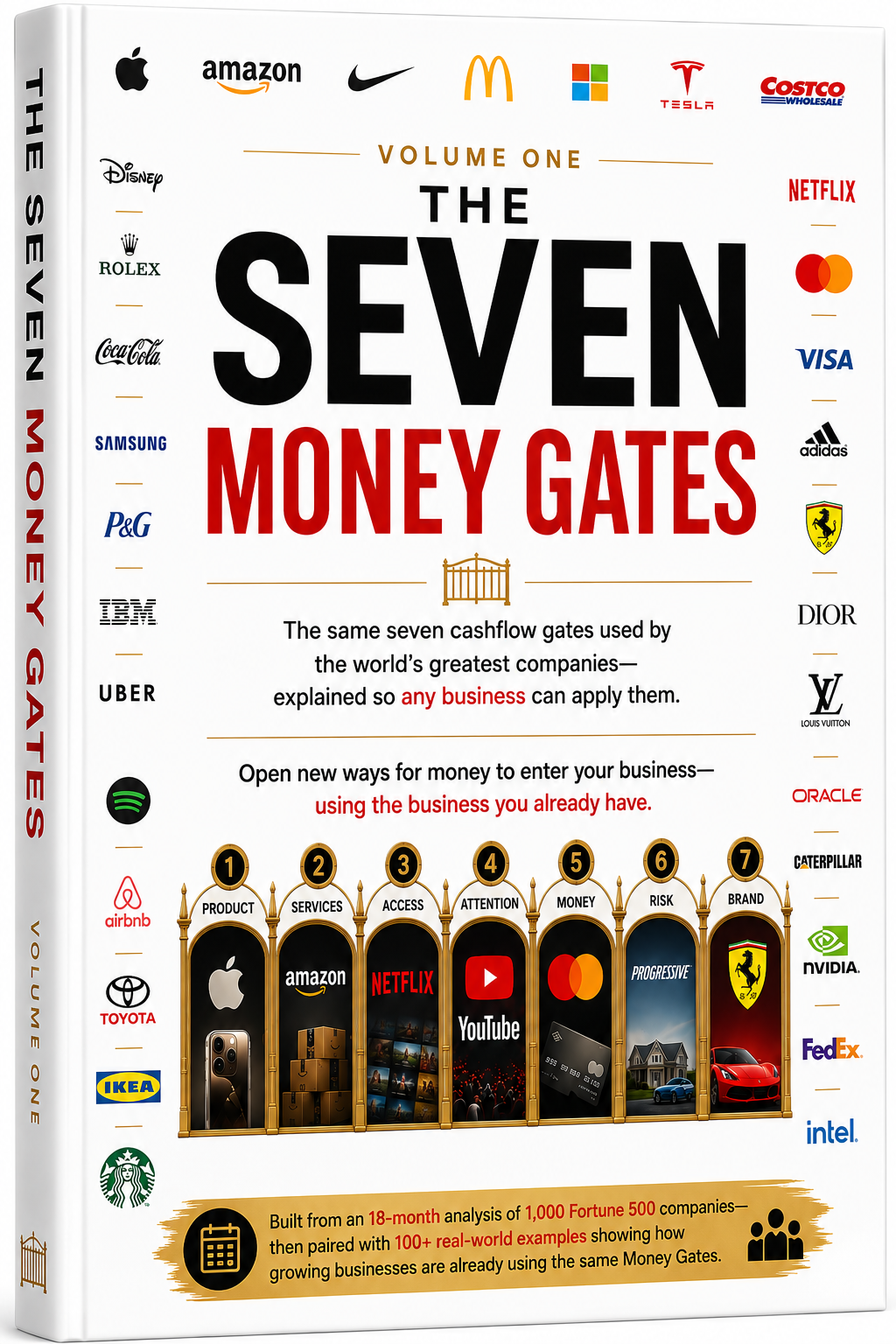
Every business extracts revenue through some combination of these 14 channels — 7 openers, each available in a Physical and a Digital medium. Use this as your reading guide.

PROFIT OPENER PHYSICAL CHANNEL DIGITAL CHANNEL
01 Products Physical Product Sales Tangible goods manufactured, packaged, and sold via retail or direct channels. The classic storefront transaction. Digital Product Sales Downloadable assets, software, templates, or digital files sold as a one-time purchase with zero delivery cost.
02 Services Physical Service Delivery In-person labor, consultations, repairs, or expertise delivered at a physical location or on-site. Digital Service Delivery Remote consulting, virtual coaching, online fulfillment, or any service rendered and delivered through digital channels.
03 Access Physical Access Gate Memberships, entry passes, physical loyalty tiers, or location-based access privileges privileges sold on a recurring basis. Digital Access Gate Subscription plans, SaaS tiers, paywalls, or recurring digital membership fees that gate content or functionality.
04 Attention Physical Attention Capture Billboard placements, event sponsorships, in-store brand shelving, or any physical advertising inventory sold to third parties. Digital Attention Capture Ad revenue, sponsored placements, affiliate arbitrage, or monetizing an owned audience's attention through digital channels.
05 Money Physical Money Mechanics Upfront payment collection, deposit structures, or float optimization — holding cash from physical transactions before fulfillment. Digital Money Mechanics Payment processing spreads, digital float, BNPL integrations, or fintech revenue extracted from digital transaction flow.
06 Risk Physical Risk Coverage Extended warranties, in-store protection plans, insurance products, or physical asset guarantees sold alongside the core product. Digital Risk Coverage Digital warranties, SLA upsells, cybersecurity add-ons, or data backup subscriptions that monetize a customer's fear of loss.
07 Brand Physical Brand Licensing Trademark royalties, franchise licensing fees, co-branding deals, or physical branded merchandise sold to third parties. Digital Brand Licensing IP licensing, white-label software deals, digital co-branding arrangements, or platform platform placement fees paid for brand association.