If you run a service business, agency, or high-value consultancy, you are likely living through a silent, expensive tragedy.
You build the landing pages. You write the email sequences. You configure the targeting parameters inside Meta or LinkedIn. You launch the ads.
And then... nothing. Or worse, clicks and likes without commitments.
Strange inquiries arrive from people who can’t afford you. Prospects book calls, ask dozens of questions, and then vanish into thin air the moment you send the proposal.
In your frustration, you blame the algorithm. You change the targeting. You rewrite the copy. You hire another specialist. But the results stay flat.
Here is the structural truth you are avoiding: Your marketing is failing not because your copy is weak, but because your campaign was engineered before it was discovered.
You built a road to a place your customers aren't actually trying to go.
It is time to escape the campaign trap. It is time to go Back to the Agora.
The Historical Proof: Returning to the Agora and the Arena
This is not a new marketing hack. It is a return to the ancient, immutable architecture of human decision-making.
For thousands of years, human beings did not make important decisions in response to isolated, private promotional messages. They made them in public spaces where stakes were high, beliefs were tested, and stories were witnessed:
- The Greek Agora (The Debate at the Square): In ancient Athens, the town square was not just a marketplace; it was the center of public debate. Philosophers argued, politicians clashed, and citizens gathered to witness the friction of ideas. The merchants who traded there didn't shout product features in isolation—their commerce was nested inside the public debate. The transaction was the natural byproduct of aligned beliefs.
- The Roman Arena (Witnessing the Stakes): The games in the Colosseum drew crowds because human beings are hardwired to witness live transformation and raw, high-stakes narratives. They did not want to be described a victory; they wanted to watch the struggle in real time. They wanted to live inside the story.
Today's conventional digital campaign tries to bypass this tribal human nature. It is the modern equivalent of a merchant shouting at people in a silent alleyway.
A Demand Project is a return to this ancient architecture. By declaring a public Enemy (the Agora debate) and running a Proof Engine showing live transformations (the Arena), you recreate the ancient conditions of trust. People gather to witness the story—and they stay to buy the outcome.
Modern Manifestations: How the World's Best Builders Create Gravity
This architecture isn't just ancient history; it is the hidden engine behind the fastest-growing personal brands and investment funds in the world today. The most successful founders do not run campaigns—they build Demand Projects.
1. Steven Bartlett (Diary of a CEO — DOAC)
Steven Bartlett does not pitch his venture capital fund (Flight Fund) or marketing agencies using traditional ads. Instead, he built a massive modern Agora (DOAC).
- The Enemy: Superficial PR-vetted corporate fluff.
- The Interrupt: Raw, unscripted, and vulnerable confessions from world-class operators.
- The Arena: The podcast table where observers witness deep, unscripted psychological and operational transformations in real time.
- The Output: Bartlett builds a massive, permanent Demand Pool of high-value founders who feel they know his thinking intimately. As a result, the highest-tier founders queue to pitch him their companies, giving him absolute Selection Power.
Is cash leaking from your business?
You just read how Why makes money. But how much margin is your own business leaving on the table?
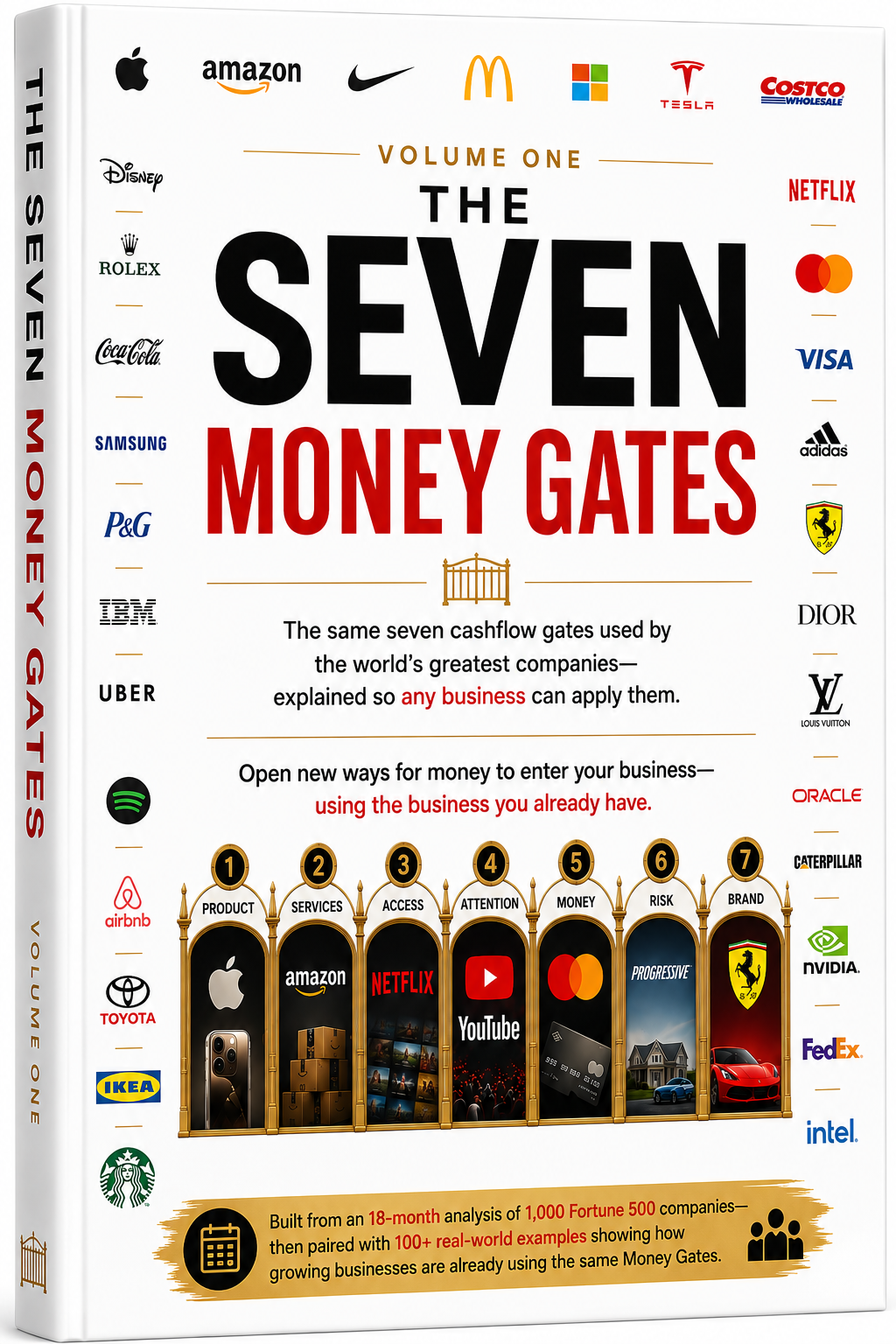
Take the 90-second Money Gate Audit to pinpoint your hidden cashflow leaks, locate trapped float, and benchmark your revenue model across all Seven Money Gates. Completing the audit automatically reserves your free copy of the upcoming book, The Seven Money Gates—Open New Ways For Money To Enter Your Business.